Solution
Airport Mass Warning System
Mass warning systems for civil and defense airports — terminal voice broadcast, airfield outdoor sirens, ramp and apron coverage, and operator-console integration with airport operations and air traffic control.
What Is a Airport Mass Warning System?
An Airport Mass Warning System is the multi-zone notification infrastructure that protects passengers, staff, and aircraft personnel across the full airport footprint — terminals, airfields, ramps, aprons, and surrounding service areas. It is one of the most operationally complex single-site mass-notification deployments in civil infrastructure, because it must coordinate with airport operations, air traffic control, security, and emergency response — without disrupting any of them.
Architecturally, an airport warning system combines several layers. Terminal voice broadcast covers passenger and check-in areas with intelligible multi-language message delivery. Airfield outdoor sirens and voice loudspeakers cover ramps, aprons, taxiways, and service roads where ground crews work outdoors. The operator console — typically at the airport operations center — coordinates activation across all zones, integrates with airport operations databases, and bridges to air traffic control where required.
The system handles a wide range of scenarios: severe weather affecting flight operations, hazardous-material incidents on apron or in cargo areas, security threats requiring terminal evacuation or lockdown, ramp-collision response, mass-casualty drills, and routine operational announcements. Each scenario activates a different combination of zones with different message content.
Compliance is shaped by aviation regulators (FAA in the US, EASA in Europe, ICAO globally) and by airport-specific operating standards. Voice intelligibility, multi-language requirements, and integration with airport-operations databases are all standards-driven.
Why You Cannot Operate Without One
Passenger Density Demands Reach
Major airports handle tens of thousands of passengers per hour through terminal areas. Single-zone PA systems cannot deliver the targeted, multi-language message that emergency response demands.
Outdoor Workforce Coverage
Ramp agents, ground crews, fuel handlers, and maintenance personnel work outdoors in high-noise environments. Only outdoor sirens with voice broadcast reach them in seconds.
Multi-Language Requirement
International airports serve passengers across dozens of languages. Voice broadcast must deliver the specific instruction in the languages the airport's passenger demographics require.
Operations-Without-Disruption
Airport mass warning must coordinate with operations and ATC — activation cannot disrupt taxiing aircraft or ramp operations beyond the targeted scenario zone.
Severe Weather and Lightning
Severe weather, lightning, and ramp-strike risk regularly require ground operations to halt. Pre-authorized siren and voice activation moves crews to shelter in seconds.
Security and Active-Threat Response
Modern airport security requires immediate, targeted lockdown and evacuation capability — voice broadcast carries the specific instruction that generic alarms cannot.
How EnergoLab Solves It
EnergoLab supplies airport mass warning hardware — terminal voice broadcast amplifiers tuned for high-traffic acoustic environments, airfield outdoor sirens with voice broadcast for ramp and apron coverage, and the operations-center console that integrates with airport operations databases and ATC. Systems are scoped to the specific airport footprint and operating standards.
Real-World Impact
Severe Weather
Major-Hub Severe-Weather Ramp Closures
Major airline hubs in the US and Europe activate ramp-closure mass warning dozens of times per year for severe weather and lightning — moving thousands of ramp personnel to shelter in under 60 seconds with documented compliance.
Security Incident
Brussels Airport Bombing — March 22, 2016
The bombing at Brussels Airport killed 16 people in the departure hall. The after-action review identified the importance of pre-rehearsed, voice-broadcast evacuation messages to avoid panic and direct passengers to safe egress routes — capabilities now standard in major-airport mass warning deployments.
Defense Aviation
Defense Airfield Severe-Weather Alerting
Defense air bases integrate Giant Voice mass warning with airfield operations to coordinate severe-weather response across flight operations, aircraft sheltering, and crew accountability — with documented response times measurably better than radio-net alerting.
Key Capabilities
Terminal Voice Broadcast
Multi-zone voice broadcast covering check-in halls, gate areas, and concourses — with intelligible delivery across multi-language passenger demographics.
Airfield Outdoor Coverage
High-output outdoor sirens with voice broadcast covering ramps, aprons, taxiways, and service roads — engineered for the high-noise outdoor airfield environment.
Operations-Center Console
Single console at airport operations integrates with airport operations databases, with role-based access, predefined scenarios, and full audit logging.
ATC Coordination Bridge
Coordinated activation with air traffic control where required — ground-stop, runway-closure, and aircraft-shelter protocols handled through the same trigger.
Multi-Language Voice Bank
Pre-recorded voice bank covering the languages the airport's passenger demographics require — selectable per scenario and per zone.
Defense Aviation Compatibility
Hardware and integration paths compatible with defense airfield Giant Voice deployments — single platform serves civil and defense aviation.
Products Used in This Solution
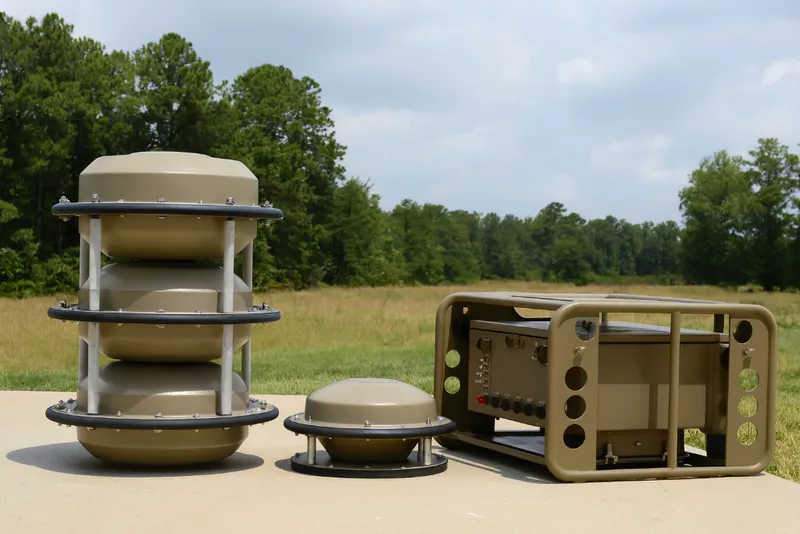
Mobile Alert System
A portable, robust alert system for rapid deployment in any environment. Ensures critical communication when it's needed most.

Amplifiers for Any Systems
High-power, efficient amplifiers designed to boost the range and clarity of alert and public address systems.
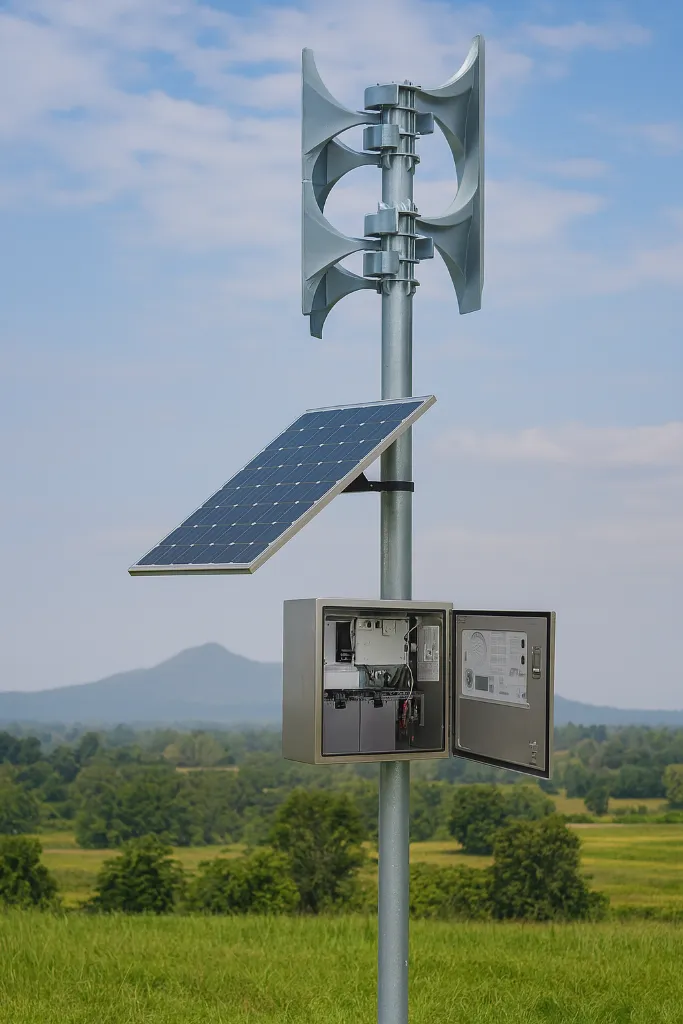
Electronic Siren with Cabinet
A powerful, solar-powered electronic siren complete with a weatherproof cabinet for long-range emergency alerts.
Typical Use Cases
- Major civil airports (international hubs and regional gateways)
- Cargo and freight airports with hazardous-material handling
- Defense airfields integrating Giant Voice with civil-aviation standards
- General-aviation airports specifying first-time mass warning
- Heliports and vertiports for emergency-services and corporate operations
Ready to Discuss Your Requirements?
Talk to our engineering team about your specific deployment scenario.