Solution
Community Warning System
Outdoor community warning systems for towns, neighbourhoods, and small municipalities — siren-and-voice infrastructure tuned to the population density and threat profile of single-jurisdiction deployment.
What Is a Community Warning System?
A Community Warning System is the outdoor mass-notification infrastructure scaled to a single town, neighbourhood, or small municipality. It delivers immediate audible warning and voice instruction to the residents living within the protected area, using a network of high-output sirens sized to the population density and topography of the community.
Architecturally, a community system is a smaller-scale cousin of a regional or national network. A single operator console — typically at the municipal emergency operations center, fire station, or police dispatch — controls the local siren network and broadcasts pre-recorded or live voice messages across the community. Activation can be manual or automatically triggered from connected severe-weather feeds, hazard sensors, or wider regional alert chains.
Communities deploy these systems for the same reasons larger jurisdictions do — but at a footprint that one municipal team can install, maintain, and operate. Severe weather, industrial-site incidents, hazardous-material releases, missing-person alerts, and active-threat scenarios all benefit from a single piece of municipal infrastructure that reaches every resident at once.
The defining operational characteristic is local control. Community systems are activated by people who know the community — its school schedule, its industrial neighbours, its evacuation routes — and the alert is shaped to match. A regional system can blanket a county with a generic message; a community system can tell its residents exactly what to do in the language and idiom they use.
Why You Cannot Operate Without One
Local Decisions Demand Local Systems
A community knows its school dismissal times, its industrial neighbours, its evacuation routes. Local activation produces messages that match local context — not the lowest common denominator of a regional system.
Severe Weather Reaches Outdoor Residents
Tornadoes, lightning, and flash floods reach outdoor residents — playgrounds, ball fields, parks, walking trails. Outdoor sirens are the only channel that reaches them within seconds.
Industrial Neighbours Need Local Alerting
Communities adjacent to chemical plants, rail lines, or other industrial facilities benefit from local alerting that responds to incidents at those facilities — without waiting for regional escalation.
Affordable Scale
A modern community system covers a town of 5,000 to 50,000 residents at a budget that fits a municipal capital plan — not the scale of a national network.
Insurance and Compliance
Many municipal insurance programmes and grant funding (FEMA, EU civil protection) reward documented outdoor mass-notification capability with reduced premiums and eligibility credits.
Maintainable by Local Teams
Modern community systems are designed to be installed, maintained, and tested by the same municipal staff who handle road signs and traffic signals — no specialist contractor required.
How EnergoLab Solves It
EnergoLab supplies community-scale outdoor warning systems — high-output electronic sirens, voice-broadcast amplifiers, and the municipal operator console. Systems are sized to the specific population density and topography of the community, integrate with regional alert chains where needed, and are designed for maintenance by municipal staff.
Real-World Impact
Severe Weather
Tornado-Belt Town Siren Networks
Towns across the US tornado belt maintain community-scale siren networks activated for severe-weather warnings. Documented community-wide reach in under 60 seconds, with annual maintenance that fits a small public-works budget.
Civil Defense
European Civil-Protection Siren Networks
European municipalities operate community siren networks under national civil-protection frameworks (BBK in Germany, COGIC in France). Networks are tested monthly with full community-wide audible coverage.
Industrial Risk
Industrial-Adjacent Community Alerting
Communities adjacent to chemical plants and rail lines deploy community alert systems integrated with industrial-site sensors — giving residents immediate warning of releases without waiting for regional emergency-management escalation.
Key Capabilities
Community-Scale Coverage
Siren network engineered to cover a town of 5,000 to 50,000 residents with overlapping audible zones — survey-validated for the specific terrain.
Municipal Operator Console
Single console at the municipal EOC, fire station, or police dispatch — with role-based access and audit logging.
Voice Broadcast
Pre-recorded scenarios for severe weather, industrial release, missing person, active threat — plus live voice for unique events.
Regional Integration
Optional bridge to county, state, or national alert chains — community sounds for community events, regional sounds for regional events.
Solar and Battery Backup
Each siren operates independently of grid power for a week or longer — engineered for the storm and disaster events the system warns about.
Maintainable by Local Staff
Designed for installation, monthly testing, and routine maintenance by municipal staff with standard public-works equipment.
Products Used in This Solution
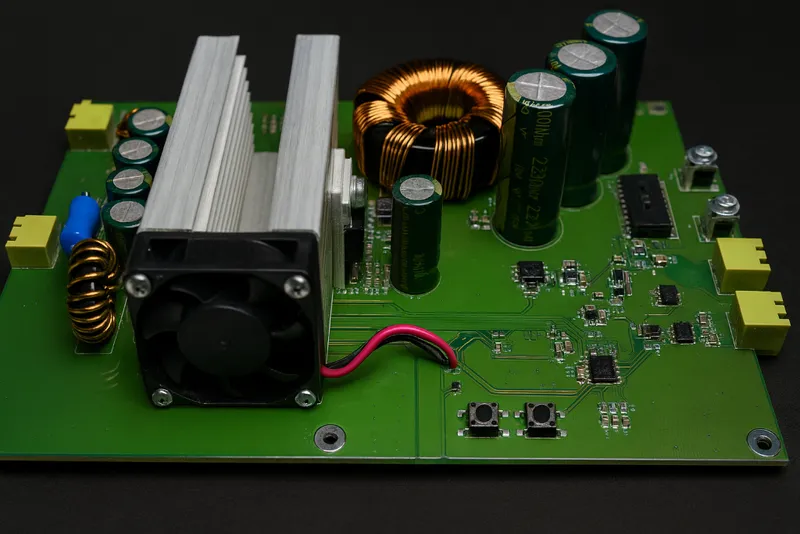
Amplifiers for Any Systems
High-power, efficient amplifiers designed to boost the range and clarity of alert and public address systems.
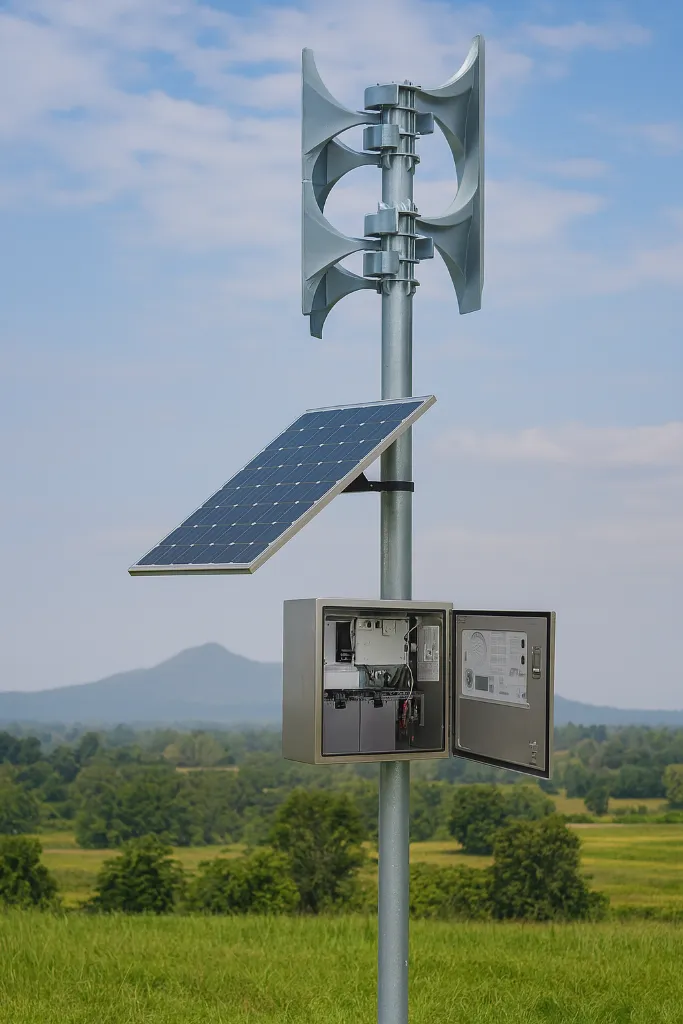
Electronic Siren with Cabinet
A powerful, solar-powered electronic siren complete with a weatherproof cabinet for long-range emergency alerts.
Typical Use Cases
- Small and mid-sized municipalities deploying first-time outdoor alerting
- Tornado-belt towns standardizing severe-weather siren networks
- European municipalities operating under national civil-protection frameworks
- Communities adjacent to chemical plants, rail lines, or other industrial facilities
- Coastal towns integrating tsunami and severe-weather alerting in one system
Ready to Discuss Your Requirements?
Talk to our engineering team about your specific deployment scenario.