Solution
Dam Warning System
Dam warning systems for downstream populations — outdoor siren networks, voice broadcast, and automated activation tied to dam-monitoring sensors that turn potential dam failures into evacuated downstream communities.
What Is a Dam Warning System?
A Dam Warning System is the downstream public-alerting infrastructure deployed to evacuate populations in the inundation zone in the event of an imminent or actual dam failure. It is one of the most consequential single-purpose alerting deployments in civil engineering — the combination of low probability and catastrophic consequence makes the existence of the system as important as the dam itself.
Architecturally, a dam warning system combines outdoor siren networks distributed along the downstream river valley, voice-broadcast loudspeakers carrying evacuation route instructions, and automated triggers from dam-monitoring sensors (water level, embankment displacement, seepage rate, spillway flow) and operator-decision activation. Activation can be manual from the dam operations center, automatic when sensor thresholds are crossed, or remote from regional emergency management.
Downstream populations are the operational focus. Dam-failure inundation zones can extend tens of kilometres downstream, with arrival times of minutes to hours depending on terrain. The siren network must cover that entire zone with overlapping audible coverage, and the voice broadcast must carry not just the alarm but the specific evacuation route — because the safe evacuation direction is often perpendicular to the river, not along it.
Standards are demanding and audited. Dam-safety authorities (FERC in the US, equivalent agencies elsewhere) require documented downstream warning capability for high-hazard dams, with regular testing, inspection, and exercise cycles. The warning system is part of the dam's operating licence.
Why You Cannot Operate Without One
Catastrophic Consequence Demands Infrastructure
Dam failures are rare but catastrophic. The downstream warning system is the only piece of infrastructure that can convert a failure scenario into a survivable evacuation — and the only piece that has to work the first time it's needed.
Evacuation Lead-Times Are Bounded
Inundation arrival times can be minutes for downstream-near populations. Pre-authorized activation through a permanent siren network is the only response fast enough to matter.
Population Is Distributed
Downstream populations are spread across river valleys, often in small communities without dense cellular or alert-app coverage. Outdoor sirens are the only channel that reaches all of them.
Evacuation Direction Matters
Safe evacuation is often perpendicular to the river, not along the road that follows it. Voice broadcast carries the specific direction — generic sirens alone do not.
Regulatory Mandate
Dam-safety authorities (FERC in the US, equivalent agencies in Europe, Asia, and Latin America) require documented downstream warning capability for high-hazard dams as a condition of operating licence.
Public Trust in Hydropower
Downstream populations live with dam-failure risk every day. A visible, tested warning system is the operator's commitment that the safety case includes a credible response — and that commitment shapes public licence to operate.
How EnergoLab Solves It
EnergoLab supplies the downstream component of dam warning systems — outdoor siren networks engineered for the inundation-zone topography, voice-broadcast amplifiers carrying evacuation-route instructions, and the dam operations center console with regional EOC backup. Every component is engineered for the multi-decade service life of the dam itself, with regulator-grade test logging and audit-ready documentation.
Real-World Impact
Dam Incident
Oroville Dam Spillway Crisis — California, 2017
The Oroville Dam main spillway and emergency spillway suffered cascading failures in February 2017, leading to the evacuation of 188,000 people downstream. The event drove substantial nationwide investment in dam-warning siren networks and integrated emergency-action plans.
Tailings Dam Failure
Brumadinho Tailings Dam — Brazil, 2019
The Brumadinho tailings dam failure killed at least 270 people. The downstream community had no functional warning system. The event drove regulatory overhaul of tailings-dam downstream warning across Brazil and globally.
Routine Operations
Routine FERC-Mandated Exercises
High-hazard hydropower dams in the US conduct annual FERC-evaluated exercises of the downstream warning system — including operator-console activation, full siren-network sounding, and timed downstream-evacuation drills.
Key Capabilities
Inundation-Zone Coverage
Siren network engineered to cover the full downstream inundation zone with overlapping audible zones — survey-validated for the specific terrain and arrival-time map.
Sensor-Triggered Activation
Automated activation from dam-monitoring sensors — water level, embankment displacement, seepage, spillway flow — in addition to operator-console manual activation.
Evacuation-Route Voice Broadcast
Voice broadcast carries the specific evacuation direction — perpendicular to the river, away from the inundation path — selectable per zone within the inundation zone.
Dam Operations + EOC Console
Synchronized activation from the dam control room and the regional emergency operations center, with role-based access and full audit logging.
Solar and Battery Autonomy
Each siren operates independently of grid power for a week or longer — engineered for the post-failure environment when grid is most likely to be disrupted.
Regulator-Grade Test Logging
Annual FERC-evaluated exercise support, monthly silent test, full audit log exportable in regulator-required formats.
Products Used in This Solution
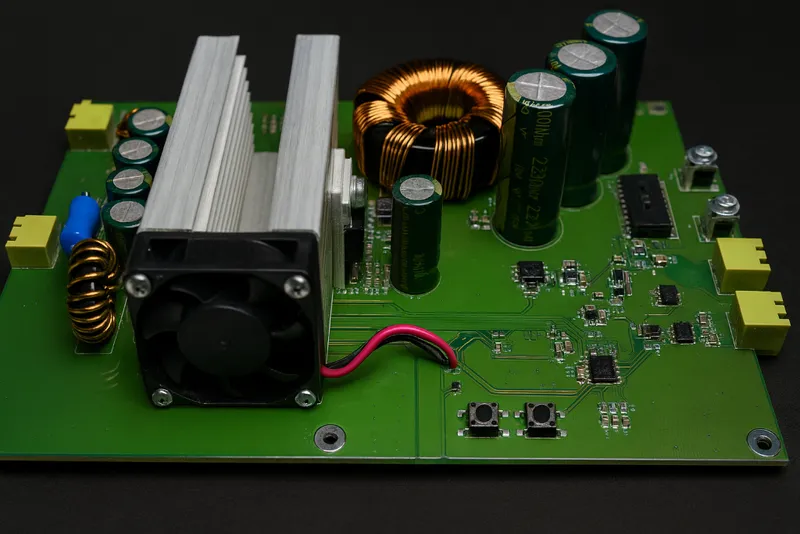
Amplifiers for Any Systems
High-power, efficient amplifiers designed to boost the range and clarity of alert and public address systems.
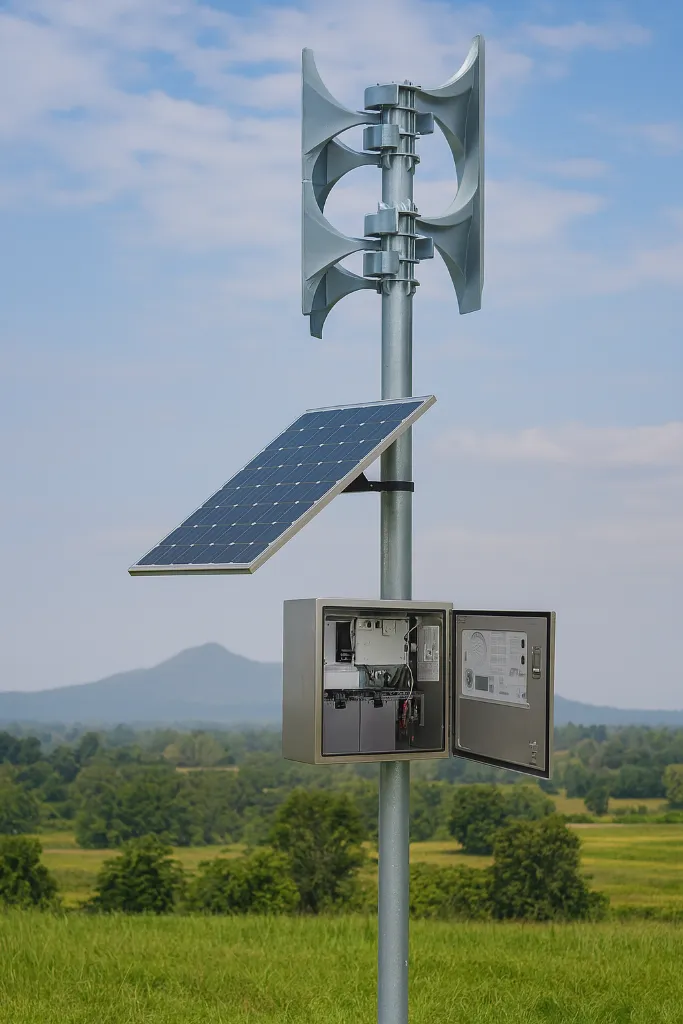
Electronic Siren with Cabinet
A powerful, solar-powered electronic siren complete with a weatherproof cabinet for long-range emergency alerts.
Typical Use Cases
- High-hazard hydropower dam operators (utility, municipal, federal)
- Tailings-dam operators in mining and metals industries
- Flood-control reservoir operators (US Army Corps of Engineers and equivalents)
- Regional emergency management agencies with downstream populations at risk
- Dam-safety regulators specifying downstream warning standards for new construction
Ready to Discuss Your Requirements?
Talk to our engineering team about your specific deployment scenario.