Solution
DoD Mass Notification System
Mass notification systems engineered to US Department of Defense standards — UFC 4-021-01 aligned, integrated with installation command, scaled from a single forward post to a continental airfield.
What Is a DoD Mass Notification System?
A DoD Mass Notification System (MNS) is the standardized infrastructure that delivers immediate, authoritative warning and instruction across a Department of Defense installation. It is governed by Unified Facilities Criteria (UFC) 4-021-01 and the family of related defense standards, and it is the named component required at every facility that handles personnel, hazardous materials, or operations of strategic value.
Architecturally, a DoD MNS combines four layers: outdoor mass notification (Giant Voice towers covering the installation perimeter), indoor mass notification (in-building voice broadcast to occupied facilities), wide-area integration (interconnect to IPAWS and host-nation civil-defense channels), and the installation operations center console that activates them. Each layer is independently survivable, and each is required by the UFC for facilities above defined occupancy thresholds.
The system handles defense-specific scenarios: ballistic and drone threats, severe weather affecting flight or training operations, hazardous-material releases, mass-casualty incidents, accountability musters, and base-wide announcements. Activation can be manual from the operations center, automatic from connected sensors, or remote from authorities outside the installation perimeter.
Compliance is non-negotiable. UFC 4-021-01 defines audibility thresholds, message intelligibility requirements, redundancy of communication paths, and quarterly testing obligations. Procurement processes require demonstrated compliance, and acceptance-test procedures exercise every alerting path end-to-end.
Why You Cannot Operate Without One
UFC 4-021-01 Mandates It
Department of Defense facilities above defined occupancy and risk thresholds are required by UFC 4-021-01 to deploy mass notification across both outdoor and indoor channels.
Personnel Density Demands Reach
DoD installations house concentrated personnel populations — barracks, family housing, training ranges, motor pool. A single point of notification failure leaves part of the population uncovered.
Multi-Threat Operating Environment
Defense installations face severe weather, hazardous-material, ballistic, drone, active-shooter, and mass-casualty threats — often in the same operational period. A unified MNS handles all of them from one console.
Joint and Coalition Operations
Multinational exercises bring temporary personnel onto installations. MNS broadcasts in plain voice — no app installation, no radio frequency assignment, no language barrier beyond clear speech.
Integration with National Alerting
DoD installations within the United States must integrate with IPAWS for cross-jurisdictional events. MNS provides the standards-compliant bridge.
Audited Test Cycles
Quarterly testing, annual exercises, and pre-deployment validation are mandatory. The MNS must produce machine-readable test logs that survive procurement review.
How EnergoLab Solves It
EnergoLab supplies the hardware backbone of DoD mass notification — UFC-aligned outdoor Giant Voice towers, indoor voice-broadcast amplifiers, the installation operations center console, and the IPAWS bridge. Systems are scoped to installation footprint and integrated with existing command-and-control infrastructure. Every component is engineered to defense durability standards and documented for procurement review.
Real-World Impact
Severe Weather
Continental Air Base Severe-Weather Alerting
DoD continental air bases in tornado-prone regions activate mass notification dozens of times per year for severe-weather warnings, with documented full-installation reach in under 60 seconds from operator activation.
Defense
Forward Operating Site Threat Alerting
Forward operating sites with integrated drone-detection radar and MNS demonstrate reduced response time to inbound threats from minutes to under 30 seconds — moving personnel to hardened positions before impact.
Industrial
Hazardous-Material Release Drills
DoD facilities handling fuel, munitions, or chemical agents conduct quarterly hazmat-release drills. Modern MNS deployments achieve installation-wide acknowledgement in under 90 seconds — the benchmark legacy public-address systems cannot meet.
Key Capabilities
UFC 4-021-01 Aligned
Hardware audibility, intelligibility, and redundancy specifications align with UFC 4-021-01 — the standard defense procurement processes require.
Outdoor + Indoor Coverage
Giant Voice towers for the installation perimeter and outdoor work areas; voice-broadcast amplifiers for occupied facilities — driven from one operator console.
IPAWS Bridge
Standards-compliant gateway to the Integrated Public Alert and Warning System for events that cross the installation boundary.
Defense-Grade Durability
IP-rated enclosures, wide-temperature electronics, EMC-hardened to defense procurement standards — engineered for 20+ years of installation service.
Centralized Activation
Single operations center console with role-based access, predefined scenarios, and full audit logging — manual, automatic, or remote activation.
Quarterly Test Logging
Continuous self-diagnostics plus regulator-grade test logs exportable for procurement review and acceptance-test documentation.
Products Used in This Solution
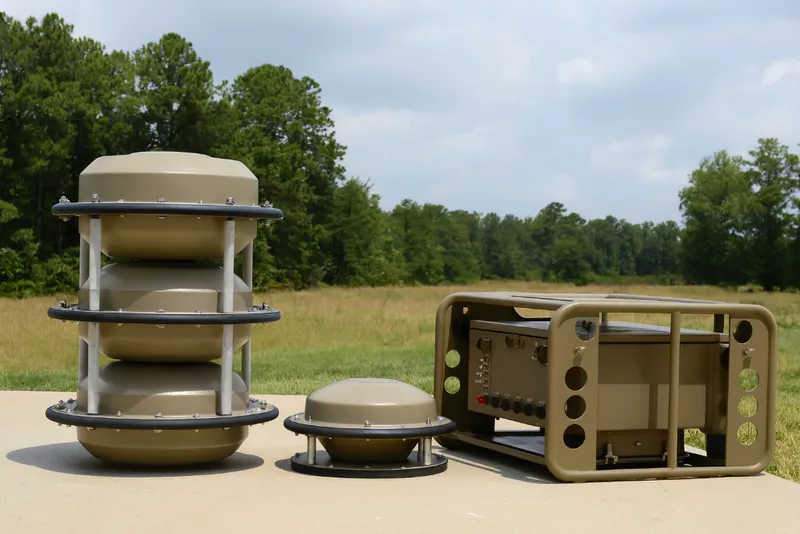
Mobile Alert System
A portable, robust alert system for rapid deployment in any environment. Ensures critical communication when it's needed most.
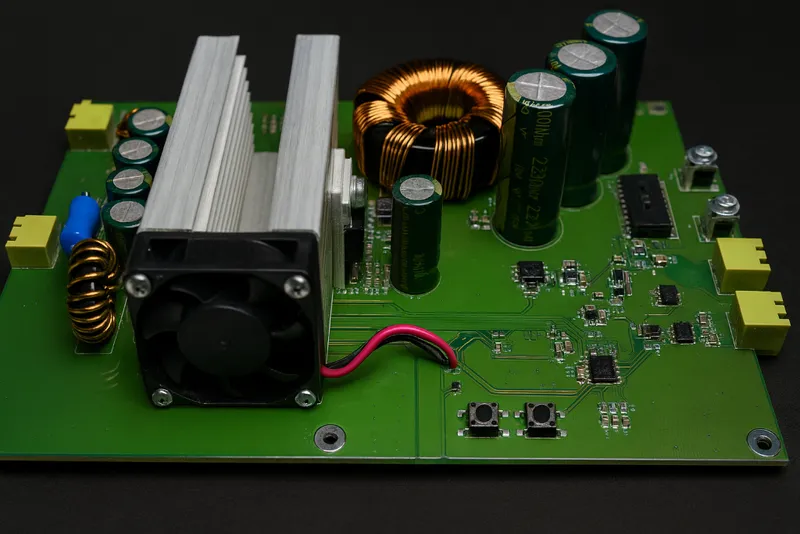
Amplifiers for Any Systems
High-power, efficient amplifiers designed to boost the range and clarity of alert and public address systems.
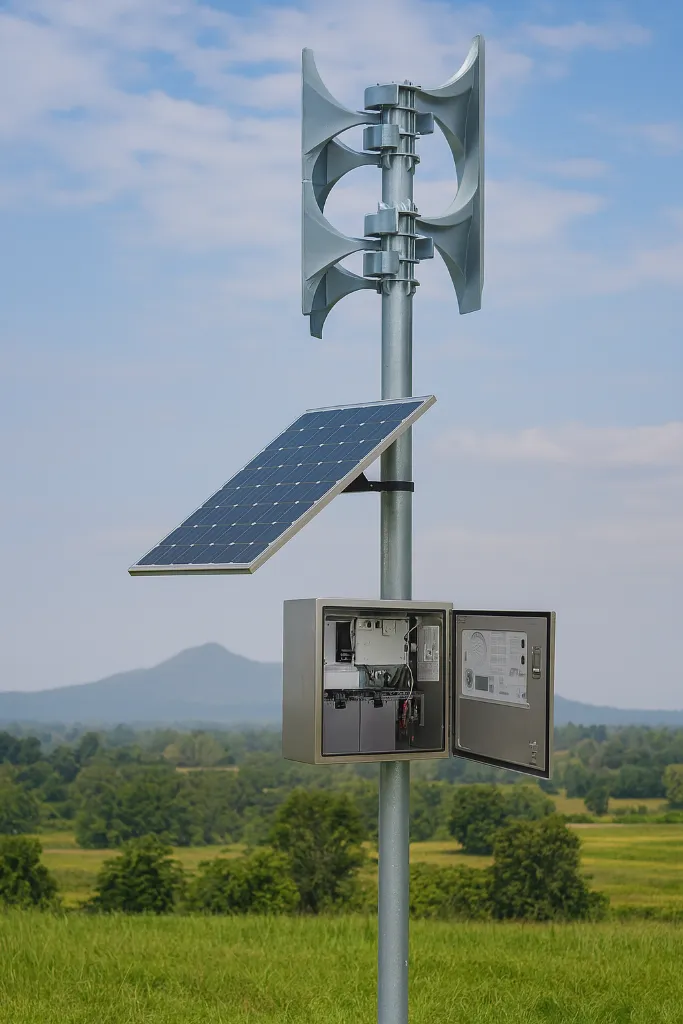
Electronic Siren with Cabinet
A powerful, solar-powered electronic siren complete with a weatherproof cabinet for long-range emergency alerts.
Typical Use Cases
- Department of Defense air bases, naval stations, and ground installations
- Forward operating sites and expeditionary deployments
- Defense training ranges and joint exercise areas
- DoD facilities handling fuel, munitions, or hazardous materials
- Defense procurement programmes upgrading legacy mass notification infrastructure
Ready to Discuss Your Requirements?
Talk to our engineering team about your specific deployment scenario.