Solution
Early Earthquake Warning System
Early earthquake warning systems — outdoor sirens, voice broadcast, and automated integration with seismic networks for the seconds-to-minutes lead time that turns shaking into survivable warning.
What Is a Early Earthquake Warning System?
An Early Earthquake Warning (EEW) System is the public-alerting infrastructure that delivers seconds-to-minutes of advance warning before destructive seismic shaking arrives. It exploits a basic physics fact: a P-wave (the first, weaker pressure wave) arrives at a sensor before the destructive S-wave (shear wave) reaches the population. A seismic network detects the P-wave, calculates the expected arrival time and intensity at distant locations, and broadcasts an alert that races the S-wave to the at-risk population through outdoor sirens, voice broadcast, mobile, and EAS channels.
Architecturally, an EEW deployment is two systems coupled together. The seismic network — operated by national geological agencies (USGS, JMA, INGV, BCSF) — detects and characterizes the event. The public-alerting network — operated by civil-protection agencies and municipalities — converts that detection into an alert that reaches the population. The public-alerting layer is where outdoor sirens and voice broadcast deliver the message that mobile and digital channels alone cannot.
The lead time available is small but life-saving. A few seconds is enough to drop, cover, and hold on. Tens of seconds is enough to stop a high-speed train, halt elevator service at a safe floor, switch off industrial gas lines, and move surgeons away from open-body procedures. Minutes — possible for distant events — is enough to evacuate vulnerable buildings.
The defining operational constraint is latency. The EEW network must detect, characterize, and broadcast the alert in the small number of seconds before the S-wave arrives at the at-risk population. Outdoor sirens with pre-authorized activation paths are the channel with the lowest end-to-end latency — they can sound within a second of the alert arriving at the local controller.
Why You Cannot Operate Without One
Drop-Cover-Hold Saves Lives
Seconds of warning is enough for the standard drop-cover-hold response — a documented survival improvement when the seismic shaking arrives.
Critical Infrastructure Pre-Action
Lead time is enough to halt high-speed trains, stop elevators at safe floors, shut industrial gas lines, and pause surgical procedures — preventing secondary disasters.
Cellular Networks Saturate
Earthquake events overload cellular networks within seconds of perceptible shaking. Outdoor sirens are the only public-alerting channel with predictable latency under those conditions.
Outdoor Populations Need Audible Channel
People outside — on construction sites, on agricultural land, in school yards — have no screen. Only a high-output siren reaches them in the seconds available.
Tsunami-Generating Events
Coastal earthquakes can generate tsunamis. The EEW system gives the additional minutes of evacuation lead-time that turns coastal earthquake survival into coastal-population survival.
Public Trust Requires Visible Infrastructure
Populations only act on an alert when they trust the source. A visible, regularly tested outdoor siren network carries the institutional authority that turns an alert into action.
How EnergoLab Solves It
EnergoLab supplies the public-alerting component of early earthquake warning networks — outdoor sirens with low-latency activation, voice-broadcast amplifiers carrying drop-cover-hold instructions, and the local controllers that convert seismic-network feeds into siren activation. Systems are sized to the specific seismic risk and population distribution of the at-risk territory.
Real-World Impact
Earthquake
Japan JMA Early Earthquake Warning
Japan's nationwide JMA Early Earthquake Warning system gives populations seconds to tens of seconds of advance warning before destructive shaking. The system is credited with halting Shinkansen trains, pausing elevators, and triggering automatic shutdown of industrial processes — reducing secondary casualties.
Earthquake
Mexico SASMEX Public Alerting
Mexico's SASMEX system delivers earthquake warning to Mexico City via outdoor sirens, broadcast, and mobile. The 60-to-120-second lead time available for events on the Pacific coast has driven sustained investment in outdoor siren coverage across the capital.
Earthquake
California ShakeAlert Public Rollout
California, Oregon, and Washington operate the ShakeAlert EEW network. Public alerting deploys via outdoor sirens, mobile push notifications, and EAS — with measurable take-up in critical-infrastructure pre-action protocols across the West Coast.
Key Capabilities
Low-Latency Activation
Local siren controllers activate within one second of receiving the seismic-network alert — the lowest end-to-end latency of any public-alerting channel.
Drop-Cover-Hold Voice Broadcast
Pre-recorded voice messages instruct the population to drop, cover, and hold — broadcast in the local language with the cultural framing the local civil-protection agency specifies.
Tsunami-Coupled Activation
For coastal events, the system extends drop-cover-hold to coastal evacuation broadcast — using the same siren network for the seconds-of-shaking warning and the minutes-of-tsunami evacuation lead time.
Critical-Infrastructure Triggers
Bridges to high-speed-rail control, elevator-pause systems, industrial-gas shutdown — pre-action triggered automatically by the same alert that sounds the population siren.
Solar and Battery Autonomy
Sirens operate independently of grid power — engineered for the immediate post-quake period when grid is most likely to fail.
Multi-Source Seismic Integration
Bridges to national seismic networks (USGS ShakeAlert, JMA, INGV, BCSF) and to private seismic-array operators — alert from whichever source arrives first.
Products Used in This Solution
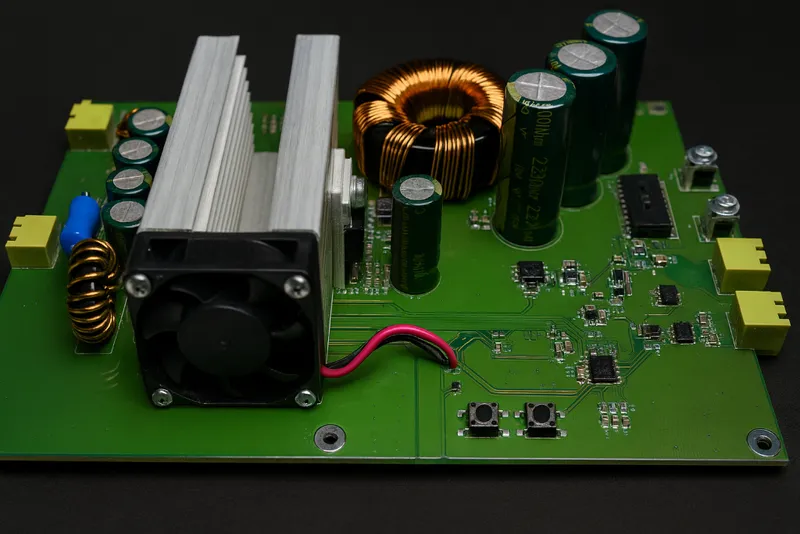
Amplifiers for Any Systems
High-power, efficient amplifiers designed to boost the range and clarity of alert and public address systems.
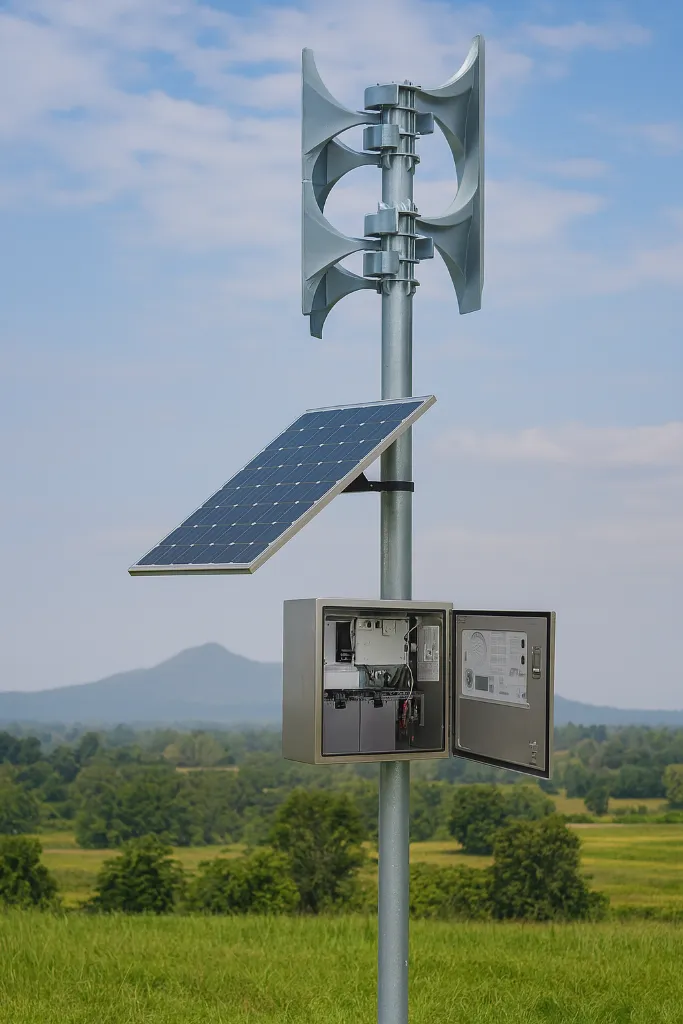
Electronic Siren with Cabinet
A powerful, solar-powered electronic siren complete with a weatherproof cabinet for long-range emergency alerts.
Typical Use Cases
- National civil-protection agencies in seismically active regions
- Coastal municipalities coupling earthquake warning with tsunami evacuation
- High-speed rail operators integrating EEW with automatic train control
- Industrial sites with seismic-shutdown safety requirements
- Universities, hospitals, and other large facilities in seismic regions
Ready to Discuss Your Requirements?
Talk to our engineering team about your specific deployment scenario.