Solution
Emergency Alert System for Businesses
On-site emergency alert systems for factories, hospitals, schools, and venues — combining wireless emergency alerts, indoor and outdoor sirens, voice broadcast, and panic-button triggers into one notification platform.
What Is a Emergency Alert System for Businesses?
An emergency alert system (EAS) for a business is the on-premises infrastructure that turns a single trigger — a panic button, a sensor reading, a dispatcher decision — into an immediate, building-wide warning that reaches every person on site within seconds. Unlike national wireless emergency alerts, a business EAS is owned by the facility operator and tuned to the specific risks and geography of one campus.
A modern business EAS is multi-channel by design. Indoor speakers and digital signage cover staff in offices and corridors. Outdoor sirens and voice loudspeakers reach people in parking lots, loading docks, and outdoor work areas. SMS and mobile push notifications follow employees beyond the perimeter. Strobes and visual indicators serve hearing-impaired personnel. Together, they ensure no single point of failure between the trigger and the people who need to act.
Triggers are equally diverse. Manual panic buttons at reception, gas detectors in chemical-handling areas, intrusion sensors at perimeters, weather feeds for severe-storm alerts, and dispatcher consoles for active-threat scenarios all feed the same notification engine. The result is a single piece of infrastructure that handles fire, severe weather, hazardous-material releases, security incidents, and medical emergencies — without the operator having to remember which separate system to use.
Compliance and insurance increasingly demand it. OSHA general-duty obligations, education-sector legislation, and most commercial property insurance policies now require documented mass-notification capability. A business EAS provides the audit logs, test records, and demonstrated reach that those obligations require.
Why You Cannot Operate Without One
Active Threats Give Minutes
An active-threat or fire scenario gives staff and visitors a few minutes to lock down or evacuate. A pre-authorized notification system reaches everyone in seconds; a phone tree does not.
Wireless Networks Fail Indoors
Cellular WEA messages are unreliable in basements, large concrete buildings, and EMF-shielded production halls. On-site sirens and voice broadcast are the only channels that guarantee coverage.
Compliance and Liability
OSHA, NFPA 72, and education-sector regulations increasingly mandate mass-notification capability. A documented EAS is the difference between defended and indefensible in post-incident review.
Hybrid and Distributed Workforce
Modern businesses have on-site staff, remote workers, and travelling field crews. A unified EAS reaches all of them through their relevant channel from a single trigger.
Different Threats Need Different Messages
Fire, severe weather, and active-threat events demand different responses. A modern EAS broadcasts pre-recorded, scenario-specific instructions — not just a generic alarm.
Insurance and Continuity Requirements
Commercial property insurers and business-continuity auditors now expect tested, multi-channel notification systems. An EAS lowers premiums and shortens audits.
How EnergoLab Solves It
EnergoLab supplies the hardware backbone of business emergency alert systems — IP-connected indoor and outdoor sirens, voice-broadcast amplifiers, panic-button kits, and the operator console that ties them together. Every component is engineered for the harsh-environment realities of factories, healthcare campuses, and outdoor venues, and integrates with existing wireless emergency alert (WEA) and EAS broadcast paths so a single trigger reaches every channel.
Real-World Impact
Education
K-12 School Active-Threat Lockdowns
US K-12 districts deploying multi-channel emergency alert systems — combining classroom intercoms, panic buttons, and SMS — have demonstrably faster lockdown initiation than schools relying on phone trees, with measurable reductions in time-to-shelter.
Manufacturing
Industrial Chemical Release Drills
Chemical and pharmaceutical plants running quarterly EAS drills consistently achieve building-wide acknowledgement in under 90 seconds — a benchmark that manual phone-based notification cannot meet.
Healthcare
Hospital Code Alerts
Hospitals with integrated emergency alert systems propagate Code Red, Code Blue, and severe-weather alerts to the right wards in seconds — including silent alerts to security and clinical leadership without alarming patients.
Key Capabilities
Multi-Zone Alerting
Trigger an alert for the whole site, a single building, or a specific floor — with separate audio for each zone where required.
Wireless Emergency Alert Bridge
Optional gateway forwards qualified alerts to public WEA cell-broadcast or local EAS station, extending reach beyond the property line.
Indoor and Outdoor Coverage
High-output outdoor sirens for parking and yard areas, in-building voice broadcast for offices and production halls — driven from one console.
Trigger-Agnostic Inputs
Accept inputs from panic buttons, gas sensors, fire panels, weather feeds, dispatcher consoles, or HTTP/MQTT integrations from third-party platforms.
Pre-Recorded Scenarios
Bank of pre-authored voice messages for fire, severe weather, lockdown, evacuation, all-clear — selected with one button or one API call.
Audit Logging and Self-Test
Every activation, every test, every device fault is logged and exportable for compliance review and insurance audit.
Products Used in This Solution
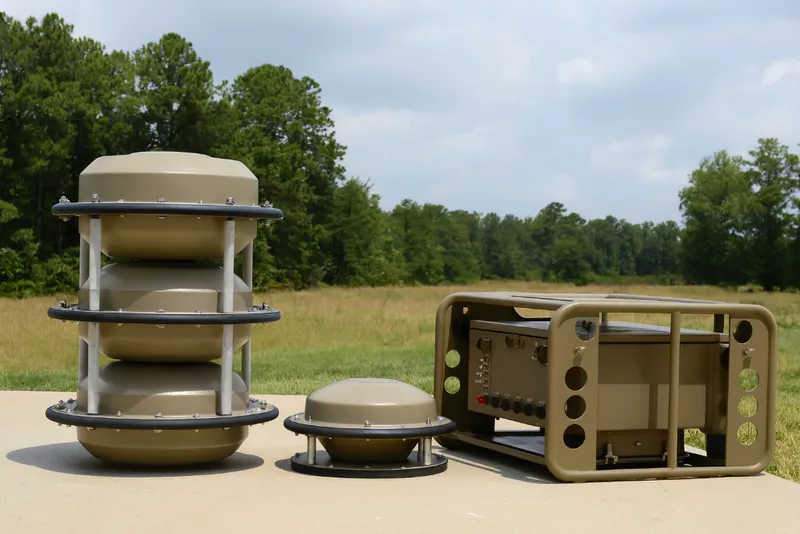
Mobile Alert System
A portable, robust alert system for rapid deployment in any environment. Ensures critical communication when it's needed most.
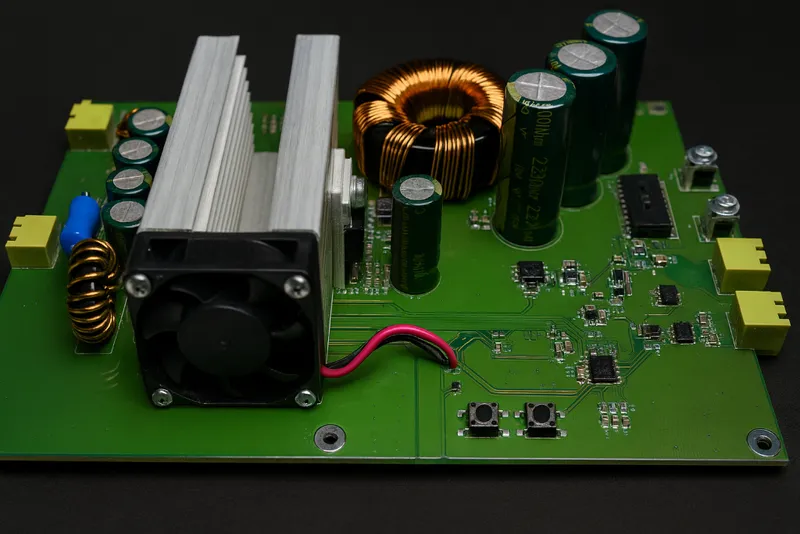
Amplifiers for Any Systems
High-power, efficient amplifiers designed to boost the range and clarity of alert and public address systems.
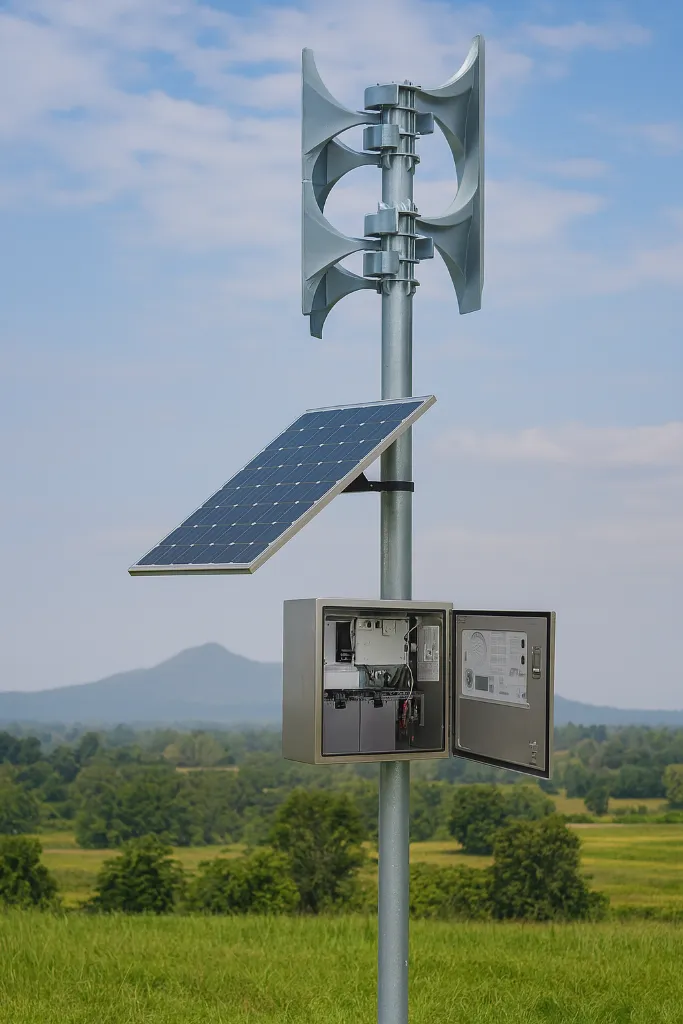
Electronic Siren with Cabinet
A powerful, solar-powered electronic siren complete with a weatherproof cabinet for long-range emergency alerts.
Typical Use Cases
- Manufacturing plants with hazardous-material handling
- Hospital and healthcare campuses requiring code-alert propagation
- K-12 and higher-education campuses with active-threat protocols
- Stadiums, arenas, and large public-assembly venues
- Corporate office complexes integrating WEA with internal mass notification
Ready to Discuss Your Requirements?
Talk to our engineering team about your specific deployment scenario.