Solution
Industrial Warning System
Industrial warning systems for plants, refineries, and ports — outdoor sirens, indoor voice broadcast, hazard-sensor triggers, and operator-console control engineered for high-noise, high-risk industrial environments.
What Is a Industrial Warning System?
An Industrial Warning System is the on-site mass-notification infrastructure that protects a workforce and surrounding community in plants, refineries, ports, mines, and other industrial sites with elevated hazard profiles. It combines high-output outdoor sirens, in-building voice broadcast, hazard-sensor triggers, and the operator-console control that ties them together.
Architecturally, the system is built around the specific risk profile of the site. Outdoor sirens cover yards, loading docks, tank farms, and outdoor work areas where ambient noise is high and personnel are mobile. Indoor voice broadcast covers process buildings, control rooms, and administrative facilities with intelligible message delivery despite the acoustic challenge of industrial environments. Hazard sensors — gas detectors, fire panels, intrusion sensors, process alarms — trigger pre-authorized scenarios automatically.
Industrial warning differs from generic mass notification in critical ways. Sirens must remain audible above 90+ dBA ambient noise. Voice broadcast must be intelligible despite reverberation in steel and concrete process buildings. Triggers must integrate with the SIL-rated safety systems that already monitor the process — not duplicate them, not contradict them. Compliance with OSHA, NFPA 1600, ATEX, and ISA standards is non-negotiable.
The community boundary matters too. Industrial sites with hazardous-material releases or fire exposure that can cross the property line are increasingly required to provide community alerting through the same warning infrastructure — bridging on-site and off-site notification through a single coordinated trigger.
Why You Cannot Operate Without One
Hazardous-Material Releases Demand Seconds
Toxic gas releases, fire incidents, and explosion scenarios give workers seconds to evacuate or shelter. Pre-authorized siren and voice broadcast activation is the only response fast enough.
Industrial Noise Defeats Generic Alerting
Plant ambient noise routinely exceeds 90 dBA. Standard PA systems and indoor alarms are inaudible. Industrial-grade siren and voice broadcast is engineered to clear that threshold.
OSHA and SIL Compliance
OSHA general-duty obligations, NFPA 1600, ATEX zoning, and ISA standards collectively define the expected industrial warning capability. A documented system is the difference between defended and indefensible in post-incident review.
Workforce Distribution
Industrial workforces span outdoor yards, indoor process areas, control rooms, and administrative facilities. A unified warning system reaches all of them from one trigger — without requiring workers to be looking at a screen.
Community Boundary Crossing
Sites with hazardous-material profiles or fire exposure are increasingly required to provide community alerting beyond the property line — and to coordinate with regional emergency management.
Insurance and Continuity
Industrial property insurers and business-continuity auditors expect tested, multi-channel notification systems. A modern industrial warning deployment lowers premiums and shortens audits.
How EnergoLab Solves It
EnergoLab supplies industrial-grade warning systems — high-output outdoor sirens engineered for industrial ambient noise, indoor voice-broadcast amplifiers tuned for process-building acoustics, the hazard-sensor integration bridge, and the operator-console control. Systems are scoped to the specific site risk profile and integrate with existing SIL-rated process safety infrastructure.
Real-World Impact
Petrochemical
Refinery Hazardous-Release Drills
Petrochemical refineries running quarterly hazardous-release drills with modern industrial warning systems achieve site-wide acknowledgement in under 90 seconds — a benchmark legacy PA-only systems cannot meet.
Industrial Disaster
Beirut Port Explosion — August 4, 2020 (No System)
The detonation of 2,750 tons of ammonium nitrate at Beirut port killed 218 people, injured over 7,000, and destroyed half of central Beirut. A fire had burned in Warehouse 12 for roughly 20 minutes before the catastrophic blast — a window in which the surrounding port and adjacent districts could have been evacuated. There was no industrial warning infrastructure tied to the known hazardous-material storage.
Mining
Mining-Site Underground Evacuation
Modern mining operations integrate industrial warning into underground stope-evacuation protocols — combining surface sirens, in-mine voice broadcast, and personal-locator integration to achieve documented evacuation times that legacy systems cannot match.
Key Capabilities
Industrial-Grade Acoustic Output
Outdoor sirens engineered to remain audible above 90+ dBA ambient industrial noise — survey-validated for the specific site acoustics.
Process-Building Voice Broadcast
Indoor voice broadcast tuned for the acoustic challenge of steel-and-concrete process buildings — intelligible message delivery despite reverberation.
Hazard-Sensor Integration
Bridges to gas detectors, fire panels, intrusion sensors, and SIL-rated process alarms — pre-authorized scenarios trigger automatically without disrupting existing safety systems.
ATEX and Hazardous-Area Compliance
Components rated for ATEX/IECEx zoned environments where required — engineered for the regulatory profile of refineries, chemical plants, and petrochemical facilities.
Community-Boundary Bridge
Optional gateway forwards qualified alerts to community-warning infrastructure and regional EAS — extending site notification beyond the property line.
Audit Logging and Self-Test
Every activation, every test, every device fault is logged and exportable for OSHA, insurance, and SIL audit review.
Products Used in This Solution
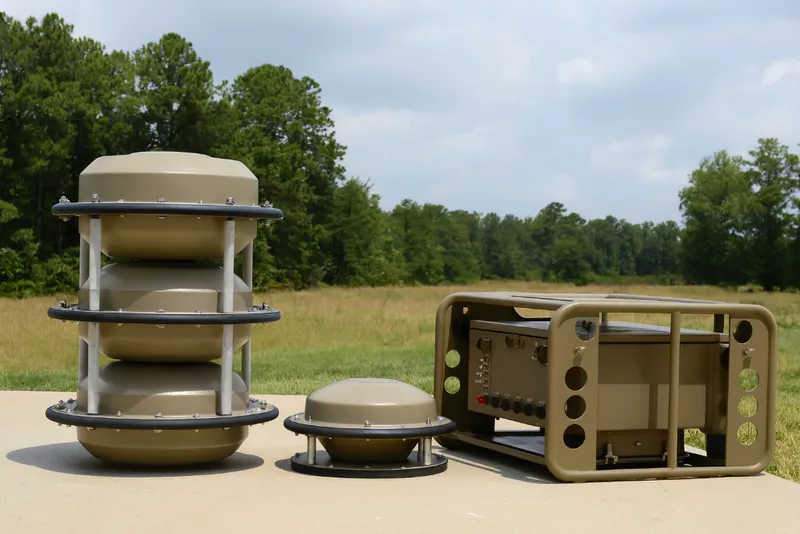
Mobile Alert System
A portable, robust alert system for rapid deployment in any environment. Ensures critical communication when it's needed most.

Amplifiers for Any Systems
High-power, efficient amplifiers designed to boost the range and clarity of alert and public address systems.
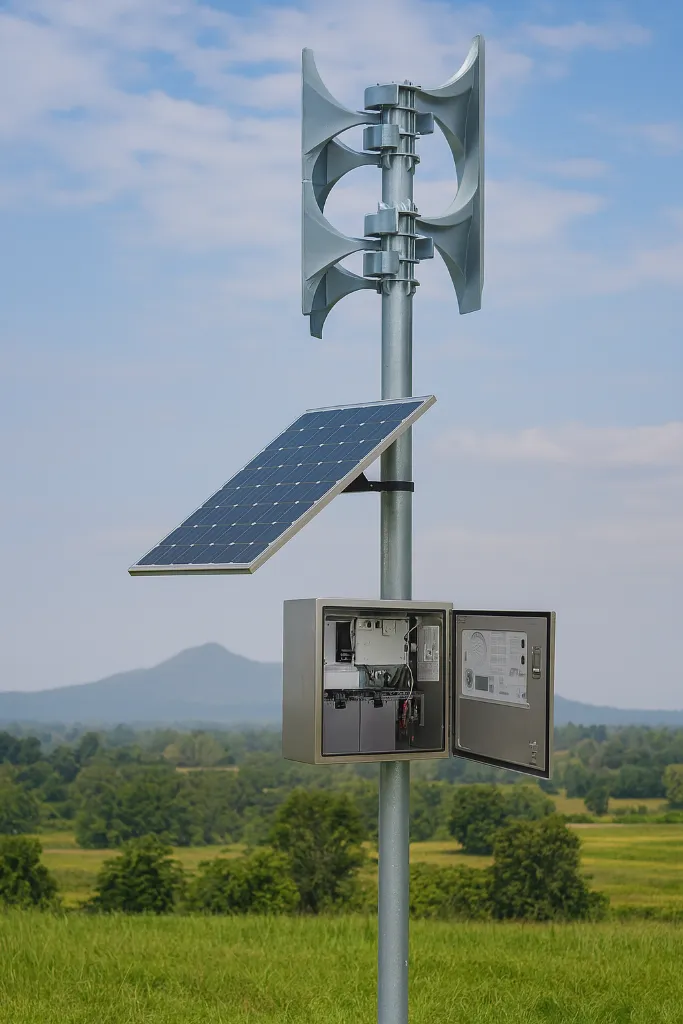
Electronic Siren with Cabinet
A powerful, solar-powered electronic siren complete with a weatherproof cabinet for long-range emergency alerts.
Typical Use Cases
- Petrochemical refineries and chemical-process plants
- Ports and terminals handling hazardous materials
- Mining operations integrating surface and underground evacuation
- Power generation facilities (fossil, nuclear, renewable balance-of-plant)
- Pulp-and-paper, steel, and other heavy-industry sites
Ready to Discuss Your Requirements?
Talk to our engineering team about your specific deployment scenario.