Solution
Outdoor Warning System
Outdoor warning systems and civil-defense sirens — the high-output, weather-survivable infrastructure that reaches people who are outside, beyond cellular coverage, or without smartphones.
What Is a Outdoor Warning System?
An Outdoor Warning System is the network of high-output sirens — sometimes called civil sirens, civil-defense alarms, or outdoor mass-notification — that reaches people who are outdoors, beyond cellular coverage, or without smartphones. It is the public-safety infrastructure of last resort: when every digital channel fails, the outdoor siren is what wakes the population.
Architecturally, an outdoor warning system is a network of pole- or tower-mounted electronic sirens, distributed across the protected territory at intervals that produce overlapping audible coverage. Each siren combines a high-output rotary or electronic transducer with a voice loudspeaker, controlled from a centralized operator console over an IP, radio, or hybrid backbone. Activation can be manual, scheduled (for routine testing), or automatic from connected sensors and alert feeds.
Outdoor warning differs from indoor mass notification in a single critical way: the message has to travel through weather, terrain, and ambient noise to reach a population that is doing something else. That requires high acoustic output, intelligible voice broadcast, and engineering that survives the storm or disaster the system exists to warn about.
Modern outdoor warning systems share a common DNA across applications — civil-defense alerting, severe-weather warning, tsunami evacuation, industrial-incident notification, and defense-base alerting all use variations of the same hardware platform. The differences are in coverage geography, activation triggers, and integration paths — not in the underlying siren-tower technology.
Why You Cannot Operate Without One
Reaches People Without Smartphones
The elderly without smartphones, tourists outside their home network, outdoor workers, drivers, and the digitally excluded all need warning. An outdoor siren reaches them when nothing else does.
Survives Cellular Network Failure
Disasters routinely destroy or saturate cellular networks. The outdoor siren is the only channel that keeps working when the population most needs to be warned.
Penetrates Outdoor Environments
People outdoors in fields, on streets, on beaches, in motor pools have no screen. Only a high-output outdoor siren reaches them in the seconds the threat allows.
Operates Without Subscription
Outdoor sirens require no app installation, no opt-in registration, no subscription. They reach everyone in the audible footprint, every time.
Time-Tested Standard
The civil-defense siren has been the public-safety standard for outdoor alerting for over a century. Modern electronic sirens preserve the trust and recognizability of that signal while adding voice broadcast and digital integration.
Multi-Channel Integration
Modern outdoor warning systems integrate with national alert chains, indoor mass notification, and digital notification platforms — the siren is one component of a multi-channel safety net, not an isolated relic.
How EnergoLab Solves It
EnergoLab supplies outdoor warning systems sized to the protected territory — from a single town to a continental defense installation. High-output electronic sirens with voice broadcast, IP-based central control, solar and battery autonomy, and integration with national alert chains. Every component is engineered for the storm-and-disaster conditions the system exists to warn about.
Real-World Impact
Severe Weather
US Tornado-Belt Outdoor Siren Networks
Communities across the US tornado belt maintain dense outdoor siren networks activated dozens of times per year for severe-weather warnings. The networks are credited with sustained reduction in tornado fatalities over the past four decades.
Civil Defense
European Civil-Defense Sirens
European countries operate national civil-defense siren networks (BBK in Germany, MoWaS feeds, NL-Alert sirens) tested monthly with full audible coverage of the population. Networks are central to civil-protection capability.
Defense
Israeli Tzeva Adom Outdoor Network
Israel's nationwide Tzeva Adom outdoor siren network gives civilians 15 to 90 seconds of warning before rocket impact — credited with reducing rocket-attack casualties by an order of magnitude over the past two decades.
Key Capabilities
High Acoustic Output
Each siren tower delivers high-output coverage of approximately 2 miles / 3 kilometres — engineered for overlapping zones across the protected territory.
Voice + Tone Broadcast
Standard civil-defense tones for instant recognition, plus voice broadcast for specific instruction — selectable per scenario.
Solar and Battery Autonomy
Each tower operates independently of grid power for a week or longer — engineered for the exact incidents that knock out grid in the first place.
IP-Based Central Control
Single operator console activates any tower, any zone, any system-wide scenario — with role-based access and audit logging.
Defense-Grade Durability
IP-rated enclosures, wide-temperature electronics, EMC-hardened — designed for 20+ years of outdoor service in coastal, desert, and high-altitude environments.
Multi-Channel Integration
Optional bridges to IPAWS (US), national alert chains in EU, and host-nation civil-defense systems — outdoor sirens as one component of a multi-channel safety net.
Products Used in This Solution
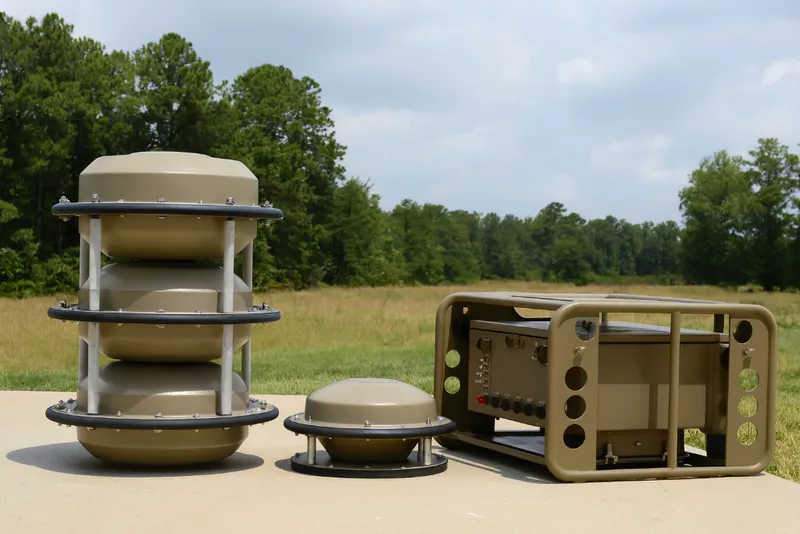
Mobile Alert System
A portable, robust alert system for rapid deployment in any environment. Ensures critical communication when it's needed most.

Amplifiers for Any Systems
High-power, efficient amplifiers designed to boost the range and clarity of alert and public address systems.
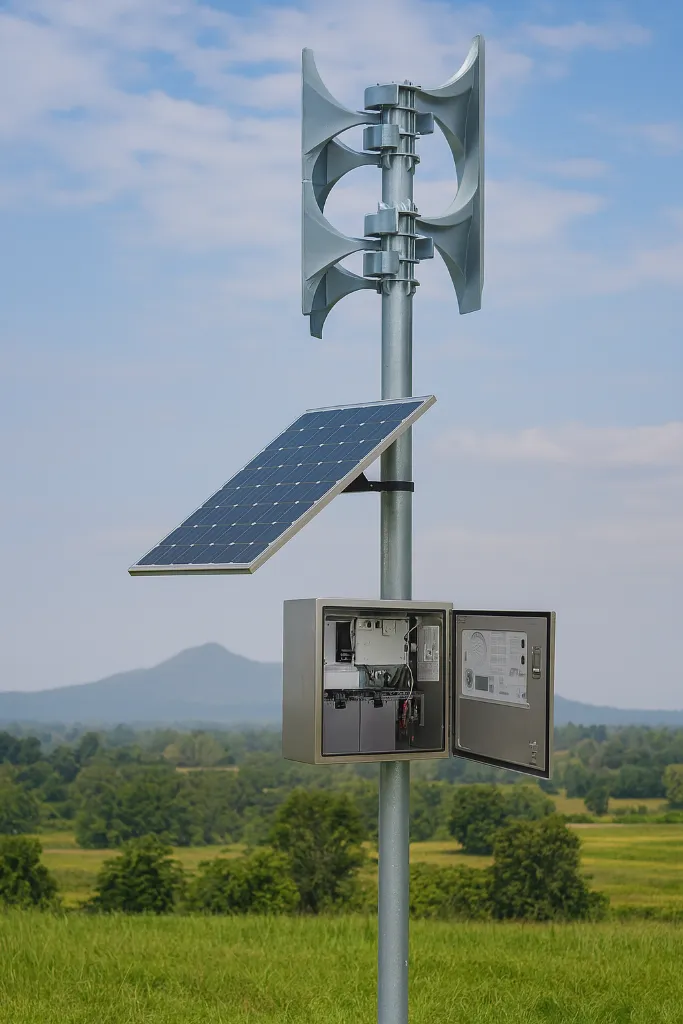
Electronic Siren with Cabinet
A powerful, solar-powered electronic siren complete with a weatherproof cabinet for long-range emergency alerts.
Typical Use Cases
- Civil-defense agencies operating national or regional outdoor siren networks
- Municipalities deploying community-scale outdoor warning
- Defense installations covering perimeter and outdoor work areas
- Coastal regions integrating tsunami and severe-weather alerting
- Industrial sites extending outdoor alerting beyond the property line
Ready to Discuss Your Requirements?
Talk to our engineering team about your specific deployment scenario.