Solution
Tsunami Early Warning System
End-to-end tsunami early warning infrastructure — from deep-ocean detection buoys to coastal sirens that reach communities in the inundation zone within minutes of a seismic event.
What Is a Tsunami Early Warning System?
A Tsunami Early Warning System is the multi-layered infrastructure that detects an underwater seismic event, models the likely tsunami it will produce, and alerts coastal populations before the wave arrives. It is the only public-safety system that must function across two completely different timescales — seismic detection in seconds, ocean-crossing wave propagation in minutes to hours — and across two completely different physical environments: the deep ocean and the populated coastline.
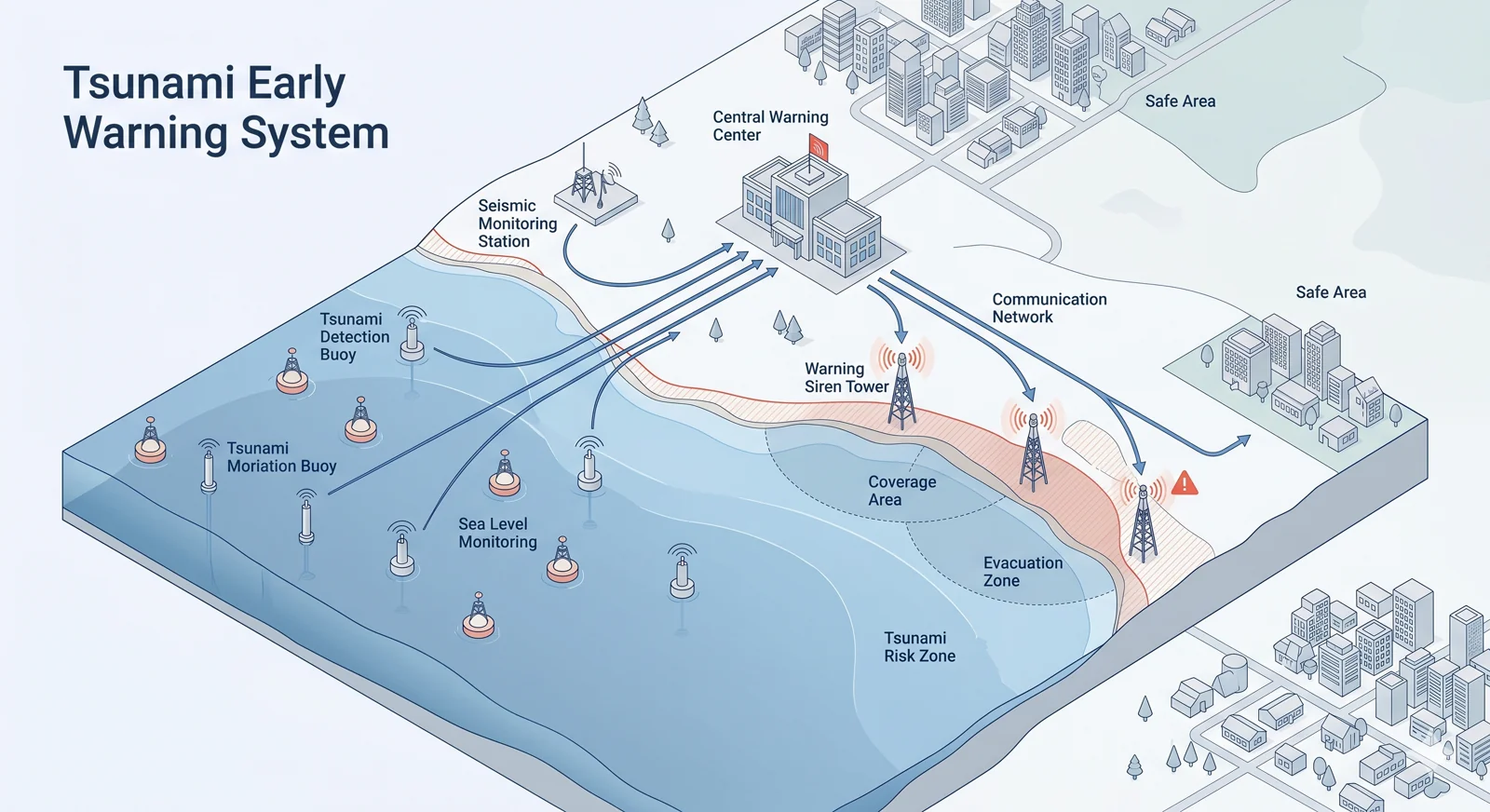
The detection layer combines seismic monitoring stations on land, tsunameter buoys (such as the NOAA DART system) anchored to the ocean floor, and sea-level monitoring stations along coastlines. DART bottom-pressure recorders detect tsunamis as small as 1 cm in 6,000 m of water, transmit acoustically to a surface buoy, then via satellite to a Tsunami Warning Center. This deep-ocean confirmation distinguishes a real tsunami from a non-tsunamigenic seismic event — eliminating the false alarms that erode public trust.
At the Tsunami Warning Center (the Pacific Tsunami Warning Center, the Japan Meteorological Agency, or a national equivalent), models predict the wave's height and time-of-arrival for each segment of coastline. The decision to alert is then propagated through the last-mile network: high-output coastal sirens, voice-broadcast loudspeakers, mobile WEA, and broadcast EAS. Sirens are critical here — they reach beachgoers, fishermen, port workers, and tourists who are not watching their phones.
What makes tsunami warning different from generic mass notification is the requirement to integrate marine sensing with terrestrial alerting. The system must be physically present in both the open ocean (where the tsunami originates) and on the coastline (where it strikes). It must operate when grid power and cellular networks fail in the seismic event itself. And it must be maintained continuously — as the 2018 Sulawesi tragedy demonstrated, an unmaintained tsunami buoy network is no warning system at all.
Why You Cannot Operate Without One
Wave Travel Time Is the Only Window You Get
Once a tsunami is in the ocean, no human action shortens its arrival time. Every second between detection and population alert is a second of evacuation lost. Manual procedures cannot beat physics — only an automated chain can.
Mobile Phones Don't Reach Beachgoers
The people in greatest tsunami danger are at the coastline — beachgoers, fishermen, divers, port workers. Most are not watching their phones. Only high-output coastal sirens audible kilometers inland reach them in time.
The 2018 Sulawesi Lesson — Maintenance Is the System
Indonesia had a tsunami buoy network in 2018, but vandalism and lack of maintenance left it non-functional. ~2,200 people died. A tsunami warning system is not equipment installed once — it is infrastructure that requires continuous engineering support, calibration, and replacement of degraded components.
False Alarms Erode Trust — Detection Confirmation Is Critical
A tsunami warning that turns out to be wrong reduces compliance with the next real warning. Deep-ocean DART confirmation — distinguishing a tsunamigenic earthquake from a non-tsunamigenic one — is what makes the system trustworthy enough that people actually evacuate.
Coastal Siren Networks Survive the Earthquake
The same earthquake that triggers the tsunami knocks out grid power and damages cellular towers along the coast. Solar-powered sirens with redundant radio backbones keep operating when public networks fail.
Cross-Border Coordination Is Essential
A single Pacific basin tsunami affects dozens of countries with hours of warning time. A coordinated regional system — like the Indian Ocean Tsunami Warning System built after 2004 — saves orders of magnitude more lives than fragmented national efforts.
How EnergoLab Solves It
EnergoLab supplies engineering and equipment for the last-mile of national tsunami warning systems: high-output coastal sirens engineered for marine environments, voice-broadcast loudspeakers for evacuation instructions, redundant communication backbones, and the long-term maintenance support that keeps a deployed network operational for two decades and beyond. Our hardware integrates with existing tsunami warning centers and detection networks via open IP and CAP protocols, so the deployment plugs into national civil-defense workflows rather than replacing them.
Real-World Impact
Natural Disaster (No System in Place)
Indian Ocean Tsunami — December 26, 2004
A magnitude 9.1 earthquake off Sumatra triggered a tsunami that killed more than 230,000 people across 14 countries. At the time, the Indian Ocean had no tsunami warning network — coastal populations had hours of travel time between the earthquake and the wave's arrival, but received no alert. In the aftermath, UNESCO and member states built the Indian Ocean Tsunami Warning System: precisely the type of national-scale alerting infrastructure whose absence cost so many lives.
System Worked (with Limits)
Tōhoku Earthquake & Tsunami — Japan, March 11, 2011
Japan's J-Alert system delivered an earthquake early warning 8 to 30 seconds before strong shaking reached Tokyo, automatically halting Shinkansen trains. Tsunami warnings followed within minutes, giving populations 30+ minutes of evacuation time before the wave reached most of the affected coastline. The system saved thousands of lives — though the disaster also exposed limits: in some areas the actual tsunami exceeded the seawall heights the population had been told to trust, illustrating that warning systems work best when they are integrated with realistic hazard mapping and evacuation protocols.
System Existed but Failed (Cautionary)
Palu (Sulawesi), Indonesia — September 28, 2018
A magnitude 7.5 earthquake triggered a tsunami in Palu Bay that killed approximately 2,200 people. Indonesia had previously installed a network of tsunami detection buoys after the 2004 catastrophe — but by 2018, vandalism, lack of replacement parts, and budget cuts had left the network non-functional. The infrastructure existed on paper but was not operational when needed. The disaster is the textbook case for why a tsunami warning system requires continuous maintenance, not one-time installation.
Key Capabilities
Coastal-Grade Marine Hardening
Sirens engineered for salt-spray, driven rain, and seismic shock — IP66 cabinets, marine-grade corrosion protection, and seismic-rated mounting.
Sub-Second Activation From Warning Center
Direct interface with national Tsunami Warning Centers via CAP protocol — alerts propagate from decision to siren activation in well under a second.
Solar Power & Battery Autonomy
Operate independently of grid power for days — essential when the same earthquake that triggers the tsunami knocks out coastal infrastructure.
Voice Broadcast for Evacuation Instructions
Beyond standard tsunami warning tones, voice-broadcast loudspeakers deliver location-specific evacuation directions in multiple languages.
Continuous Self-Diagnostics
Every siren reports its status to the warning center in real time — failures are detected before the next event, not during it.
20+ Year Maintenance Support
In-house engineering and full lifecycle support means coastal networks stay operational long-term — directly addressing the 2018 Sulawesi failure mode.
Products Used in This Solution
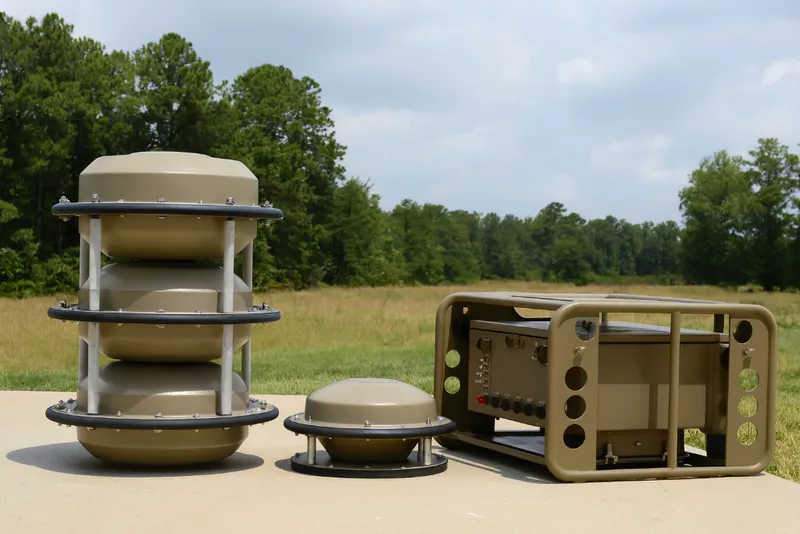
Mobile Alert System
A portable, robust alert system for rapid deployment in any environment. Ensures critical communication when it's needed most.

Amplifiers for Any Systems
High-power, efficient amplifiers designed to boost the range and clarity of alert and public address systems.
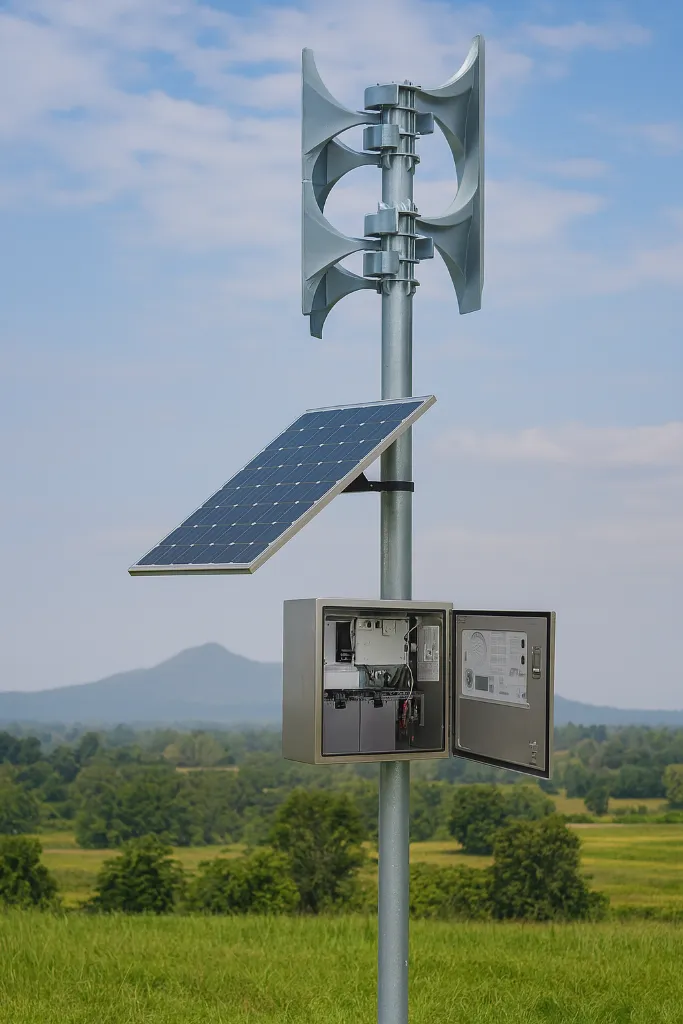
Electronic Siren with Cabinet
A powerful, solar-powered electronic siren complete with a weatherproof cabinet for long-range emergency alerts.
Typical Use Cases
- National tsunami warning agencies extending coverage to remote coastlines
- Pacific and Indian Ocean states modernizing post-2004 IOTWS infrastructure
- Port and harbor authorities protecting maritime workers and facilities
- Tourist coastal regions with high seasonal beach populations
Ready to Discuss Your Requirements?
Talk to our engineering team about your specific deployment scenario.