Solution
Wildfire Warning System
Wildfire warning systems for fire-prone regions — outdoor sirens, voice broadcast, and automated activation tied to fire-behaviour sensors and meteorological feeds for rapid evacuation alerting.
What Is a Wildfire Warning System?
A Wildfire Warning System is the outdoor mass-notification infrastructure that delivers evacuation alerts and shelter-in-place instructions to populations living in fire-prone wildland-urban interface regions. It is purpose-built for the specific time-and-distance dynamics of wildfire — events that progress unpredictably, accelerate without warning, and can outrun cellular and radio infrastructure as they advance.
Architecturally, a wildfire warning network combines high-output outdoor sirens distributed across the at-risk territory, voice-broadcast loudspeakers carrying evacuation route and shelter instructions, and automated triggers from fire-behaviour sensors, weather stations, and incident-management feeds. Activation can be manual from a county or regional emergency operations center, or automatic when defined sensor thresholds are crossed.
Wildfire alerting differs from generic mass notification in critical ways. Sirens must remain operational under smoke and ember-fall conditions that disable conventional infrastructure. Voice messages must communicate not just the alarm but the specific evacuation route, because fire-blocked roads change the safe-direction calculation in minutes. Solar and battery autonomy must outlast the grid failures that wildfires routinely cause.
Coordination across jurisdictions is the defining operational challenge. Fires cross county and state boundaries, evacuation orders span jurisdictions, and the alert system must speak with one voice across all of them while respecting the operational authority of each local incident commander.
Why You Cannot Operate Without One
Wildfires Outrun Cellular Networks
Fast-moving wildfires routinely destroy cell towers within hours of ignition. Outdoor sirens are the only channel that guarantees a signal to evacuate when cellular has failed.
Evacuation Routes Change in Minutes
Road-blocking fire spread can change the safe-evacuation direction faster than any printed plan can update. Voice broadcast over the siren network communicates the current safe route in real time.
Outdoor Workers and Tourists
Agricultural workers, recreation visitors, and trail users are away from screens and often outside cellular coverage. A high-output outdoor siren is the only channel that reaches them.
Power Grid Fails Early
Public-safety power shutoffs and fire-driven grid failures disable conventional alerting before the fire arrives. Solar-powered, battery-backed sirens keep operating through the blackout.
Cross-Jurisdictional Coordination
Wildfires cross county and state lines. A unified alert network speaks with one voice across all affected jurisdictions, eliminating contradictory evacuation orders.
Documented Lessons-Learned
Every major fire-disaster after-action review — Camp Fire, Maui, Australian bushfires — has identified inadequate outdoor alerting as a contributing cause of casualties.
How EnergoLab Solves It
EnergoLab supplies the outdoor component of wildfire warning networks — high-output electronic sirens with voice broadcast, automated triggers from fire-behaviour and weather sensors, and the regional operations center console. Systems are sized to the specific terrain and population distribution of the at-risk territory, and survive smoke, ember-fall, and grid-loss conditions that disable conventional alerting infrastructure.
Real-World Impact
Wildfire Disaster
Camp Fire — Paradise, California, 2018
The fire that destroyed Paradise, California killed 85 people. The county after-action review identified inadequate outdoor alerting and over-reliance on opt-in mobile alerts as primary contributors to the death toll. Subsequent investments across California focus heavily on outdoor siren deployment in wildland-urban interface zones.
Wildfire Disaster
Maui Wildfire — Lahaina, Hawaii, 2023
The Lahaina wildfire killed at least 100 people. Hawaii's outdoor siren network was not activated for the wildfire — a decision that became central to the after-action investigation. The event drove statewide review of outdoor-siren wildfire-activation protocols.
Routine Operations
Australian Bushfire Siren Networks
Australian state-level fire authorities maintain extensive outdoor siren networks in bushfire-prone regions, with documented evacuation lead-times measurably better than mobile-only alerting in remote and rural communities.
Key Capabilities
Smoke- and Ember-Resistant Design
Siren electronics housed in IP-rated enclosures with intake filtration — engineered to operate through smoke and ember fall that disables conventional outdoor electronics.
Voice Broadcast for Evacuation Routes
Sirens carry not just the attention tone but the specific evacuation route — broadcast in real time as fire-blocked roads change the safe-direction calculation.
Solar and Battery Autonomy
Each siren is solar-charged with seven-plus days of battery autonomy — engineered to outlast the grid failures that wildfires routinely cause.
Sensor Trigger Integration
Automated activation from fire-behaviour sensors, weather stations, and incident-management system feeds — no human in the loop for the fastest response.
Cross-Jurisdictional Coordination
Single operator console scales from a single county to multi-state coordination — all jurisdictions speak with one voice.
Daily Self-Diagnostics
Every siren reports status daily; faults are detected before the next fire season starts, not after.
Products Used in This Solution
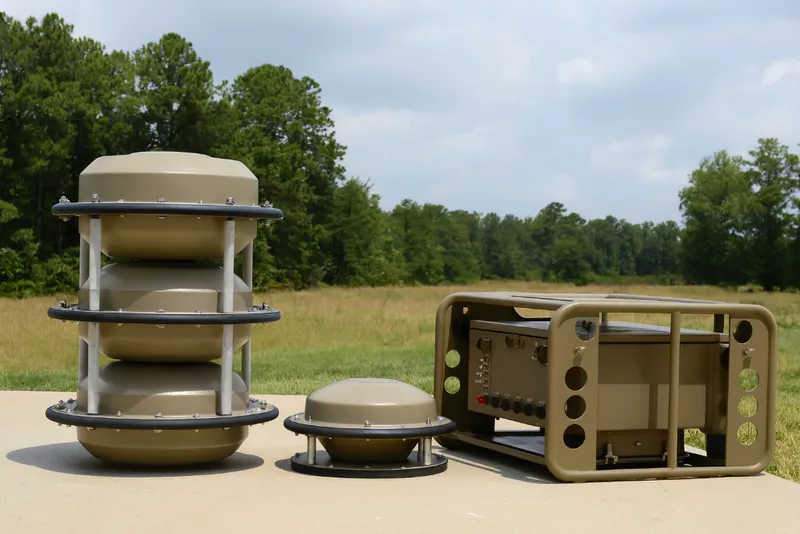
Mobile Alert System
A portable, robust alert system for rapid deployment in any environment. Ensures critical communication when it's needed most.

Amplifiers for Any Systems
High-power, efficient amplifiers designed to boost the range and clarity of alert and public address systems.
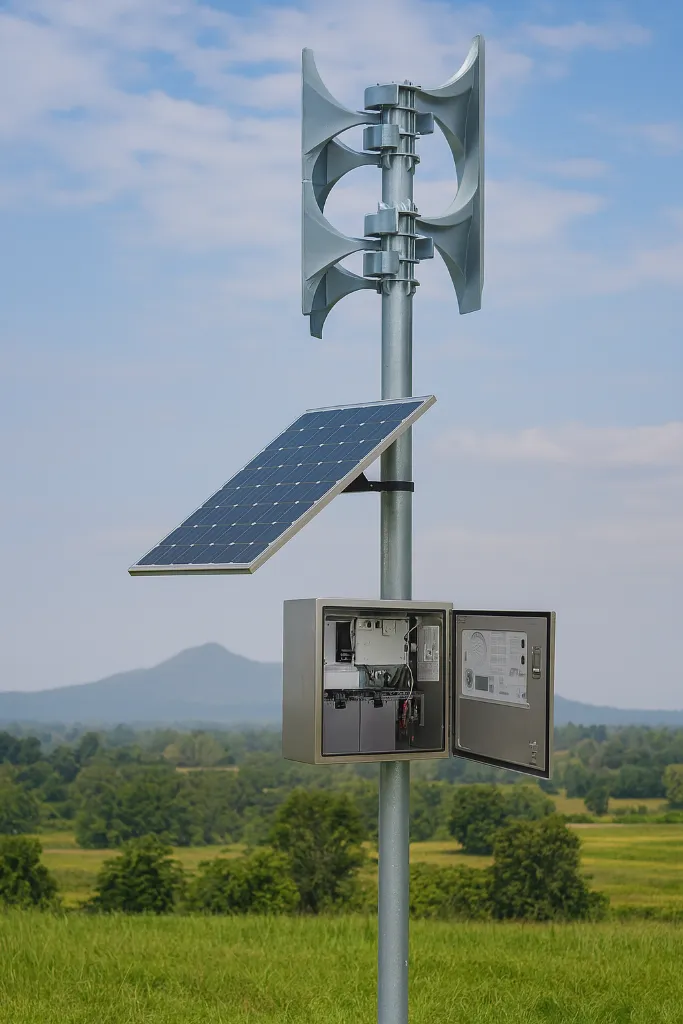
Electronic Siren with Cabinet
A powerful, solar-powered electronic siren complete with a weatherproof cabinet for long-range emergency alerts.
Typical Use Cases
- California, Oregon, and Washington counties in wildland-urban interface zones
- Australian state fire authorities maintaining bushfire siren networks
- Mediterranean-region municipalities (Greece, Spain, Portugal, France)
- Hawaiian islands integrating wildfire activation into existing tsunami siren networks
- Tribal lands and national-forest gateway communities
Ready to Discuss Your Requirements?
Talk to our engineering team about your specific deployment scenario.